
Five years ago, adding a battery to a solar project was often difficult to justify commercially. Today, the question is increasingly becoming: can you still justify leaving one out? We brought together Ecorus experts Joost Verplak, Commercial Lead, and Chanan Schouten, PPA Manager, to talk about what is driving that shift, why BESS is becoming an essential link between generation and consumption, and what still stands in the way of fully integrated projects.
For Joost and Chanan, the starting point is clear: the energy system has changed. Solar generation is still growing, but electricity demand rarely follows exactly the same curve. And in the meantime, grid congestion increasingly limits how energy can move between the two.
That is pushing projects towards solutions that would have seemed unnecessarily complicated only a few years ago.
“Seven years ago, grid congestion played a much smaller role,” Chanan says. “As a consumer, you could simply take electricity from the grid. That was much easier. Grid congestion is really the driver behind many of the more complex constructions we are seeing today.” One of those constructions combines solar, BESS, a PPA and a direct connection to the off-taker. According to Chanan, this is exactly where his work and Joost’s are coming together more and more often.
From nice-to-have to essential link
So, are we heading towards a market in which every solar project comes with a battery?
For smaller projects, both are more cautious. There are still situations where generation and demand match well enough without storage. But for larger projects, the direction is becoming increasingly clear. Joost sees storage as an essential part of a renewable energy system: “Generation and consumption rarely happen at exactly the same moment, so something has to bridge the gap. Today, batteries are the most obvious way of doing that.”
Chanan goes even further when looking at PPA’s. “A battery is basically essential for PPA’s in the current market.” The reason is not simply that batteries allow renewable energy to be stored. “They make the electricity more useful and potentially more valuable. Solar energy generated in the middle of the day can be shifted towards the morning or evening, when demand and prices may be higher. At industrial sites, storage can also increase self-consumption and reduce the amount of electricity that needs to pass through the grid.”
And despite all the talk about sustainability, the decision is often ultimately financial.
“That is purely what it comes down to,” Chanan says. “Self-consumption has a financial value as well. If you use the electricity yourself, you don’t have to take it from the grid.”
What happens when everything comes together
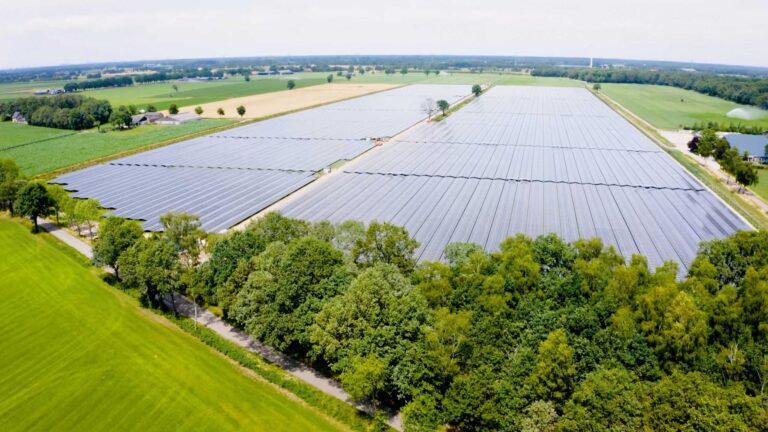
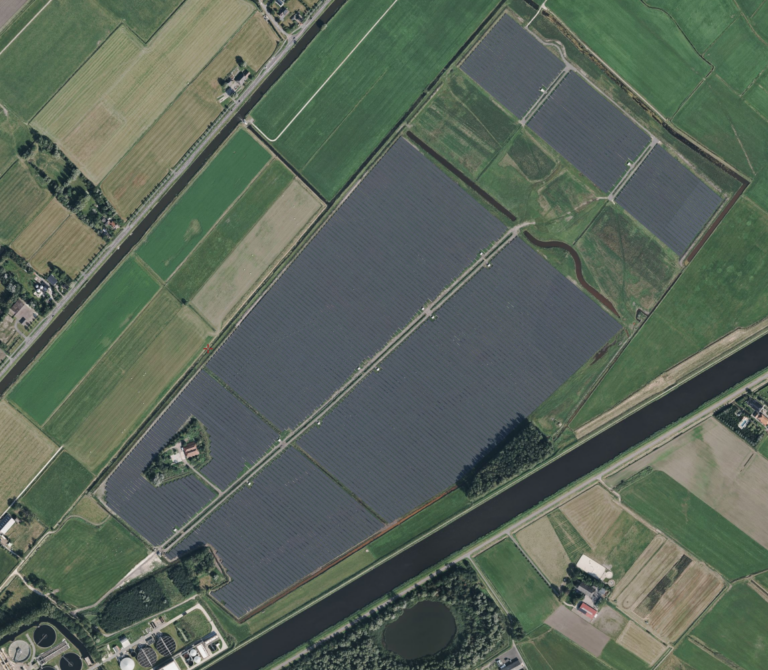
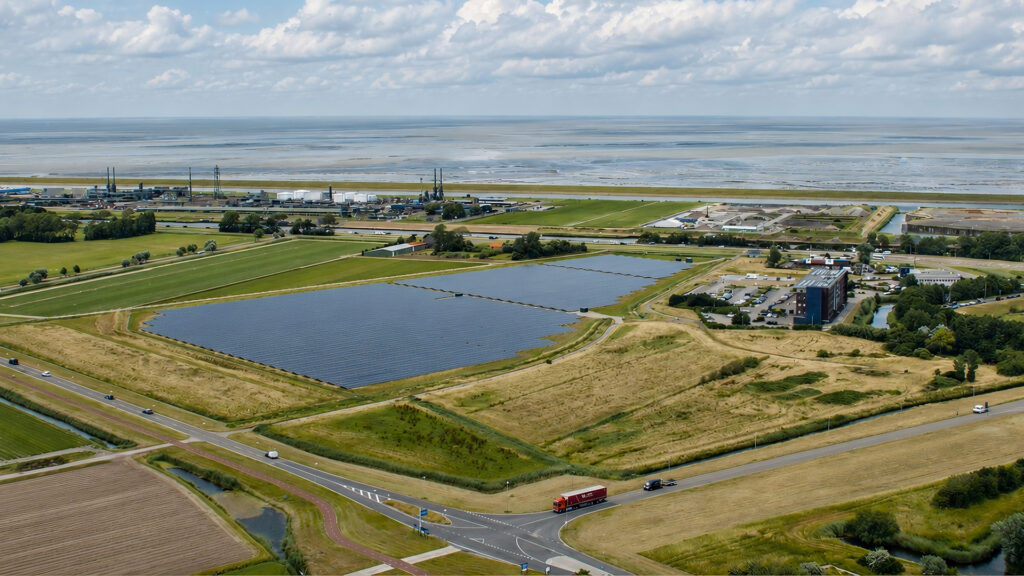
Ecorus’ solar project Heldair II are a good example of how those different pieces can reinforce each other. The project started with a solar park and a PPA. A battery is being subsequently added, together with a direct connection to a fast charging station nearby. The charging station itself did not have the possibility to take the required electricity from the grid. The combination created another route: electricity from the solar park and battery can be supplied directly to the charging station instead of travelling through the public grid.
But the project also shows that combining technologies alone is not enough. The commercial structure around them matters just as much. Battery revenues can be variable and uncertain, which historically made BESS projects difficult for banks to finance. At project Heldair II, the fast charging station guarantees a minimum level of revenue. If the battery earns less, they cover the difference. “That gives the battery a more stable income,” Chanan explains. “For the bank, the risk becomes much smaller, which means they are willing to finance a larger share of the project.”
Similar structures, often referred to as tolling agreements, are becoming more common. Energy companies or off-takers guarantee a certain minimum payment for battery capacity, taking away part of the uncertainty that previously made financiers reluctant to step in.
According to Joost and Chanan, that development could become an important accelerator for BESS.
The best time to think about BESS is before you design the project
There is, however, a big difference between adding a battery to an existing solar park and designing the two as one system from day one. And that difference can literally be found in the route the electricity has to travel.
Add BESS to an existing solar park and the electricity may have to pass through several inverters and transformers before entering the battery and then travel through more components on its way back out. Every component creates some energy loss. Design the battery into the project from the beginning and that route can become considerably shorter.
“You drastically reduce the number of components where energy is lost,” Joost explains. “That simply means you can put more capacity onto the grid. And that capacity is more energy you can sell.”
Yet the technically most efficient solution is not automatically the commercially smartest one. Current rules around subsidies and Guarantees of Origin can require the electricity streams from solar and BESS to remain distinguishable. In some situations, sending solar electricity directly through a battery can mean losing part of that financial value. So developers can end up deliberately choosing a less efficient technical design because the total business case works better. That is exactly why both argue that BESS should enter the conversation earlier. “Clients often start looking at round-trip efficiency when they start tendering a separate BESS and PV project after development has wrapped up.” Joost says. “But the choice that allows you to achieve a higher efficiency often has to be made one step earlier.”
Technical design vs. commercial structure
The same applies on the PPA side. Knowing that storage will be available from the beginning changes how the project can be sized and what can be offered to an off-taker. Different customers have different consumption profiles and therefore different requirements from a battery. “If you discuss that from the start, you can end up with a better PPA,” Chanan says. “And better ultimately means a higher price for the developer, owner or producer. You become more attractive as a producer.”
And in a market where margins are not particularly large, those choices can determine whether a project gets realised at all. That also means the traditional assignment of developing a solar project, arranging a PPA and thinking about storage later, is becoming harder to defend for larger projects. The battery is no longer simply an extra asset sitting next to solar. Its design can affect the PPA, the PPA can affect the required battery size, and both can influence whether a bank is willing to finance the project.
So, will every solar project have a battery?
Not tomorrow. And not even every project. Smaller projects can still work perfectly well without storage, particularly where generation and consumption already match. But for larger projects, both Joost and Chanan expect BESS to become impossible to ignore. Especially because the pressure that brought batteries into the conversation in the first place is not disappearing. “Grid congestion is the main reason,” Chanan says. “Ultimately, you do this to keep your business running. Whether you are a factory, a fast-charging station or something else.”
That makes grid congestion an unusual force in the energy transition: it is simultaneously one of its biggest obstacles and one of the reasons the market is being pushed towards smarter combinations of generation, storage and consumption. For Joost and Chanan, the direction is therefore less about whether every solar project needs a battery and more about something else: if a larger project is being developed today, can you still afford not to think about storage from day one?