Merriweather font

How we deliver
predictable
energy assets.

Our operating model is built to reduce exposure before construction begins and protect performance through delivery. We make assumptions explicit, validate whether a project truly holds, execute within defined boundaries and confirm performance under real conditions.

The market no longer rewards assumptions.

Renewable energy has matured into infrastructure. In that environment, permitted is not the same as buildable, and modelled is not the same as proven. Projects rarely lose value because technology does not work. They lose value when assumptions remain untested, when integration is incomplete, or when execution exposes what validation did not resolve. 

1

RTB is no longer a formality

A permitted project is not automatically buildable. Ready-to-Build must survive due diligence without structural correction and remain executable under real grid and market conditions.

2

Assumptions fail under pressure

Design logic, CAPEX and revenue expectations often depend on assumptions that do not hold in execution. When reality corrects them late, value is lost.

3

The real risk is the gap

The gap between development assumptions and execution reality is where margin erodes, timelines slip and performance becomes unstable. This is where projects stop behaving as intended.

Energy systems
built to perform
as intended

We design, validate and deliver large-scale energy systems that behave as predictable and defensible assets. What clients need is not megawatts alone, but infrastructure that performs reliably under real market conditions, over time and under pressure.

Our role is to ensure that projects enter execution on validated assumptions, are delivered within defined boundaries, and perform in line with their financial logic once operational. 

One connected model from validation
to performance.

Our way of working is not a set of separate services. It is one connected operating model that starts before commitment and continues until performance is confirmed under real conditions. Each phase strengthens the next, so uncertainty is contained early, execution remains controlled and outcomes stay structurally defensible.

Consultancy phase

Remove ambiguity before commitment

Before capital is committed, we make technical, financial and regulatory assumptions explicit. Design, grid conditions, commercial logic and constraints are not taken at face value, but examined for where they hold and where they are exposed.

At this stage, uncertainty is not avoided, but confronted. This allows decisions to be based on understanding rather than momentum, while exposure is still visible and can still be contained.


Consultancy phase
RTB validation phase

Validate before construction

Once assumptions are clear, the project is stress-tested as one coherent system until it reaches a genuinely ready-to-build position. Grid feasibility is assessed under real conditions, technical design is tested for constructability, and CAPEX and financial logic are challenged beyond base-case assumptions.

Ready-to-Build is not treated as a status, but as a threshold. The project must withstand scrutiny without fundamental redesign and hold its logic under pressure. If it does, it moves forward. If it does not, it is adjusted or stopped before execution begins. 

RTB validation phase
EPC phase

Execute within defined boundaries

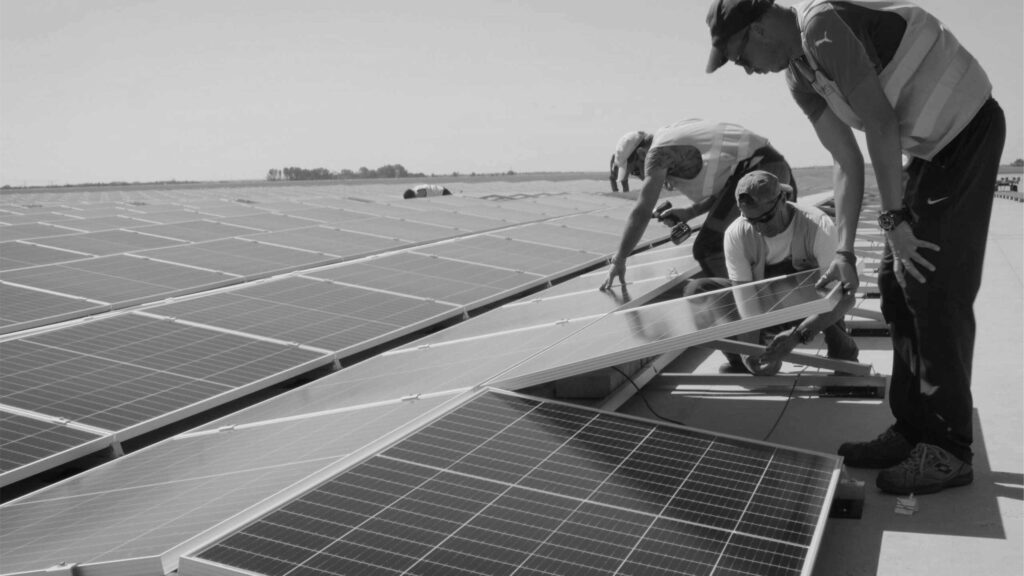
When a project enters construction, it does so on validated assumptions. Scope, design, procurement and construction are carried out within clearly defined technical and financial boundaries.

Execution is not the phase where uncertainty is absorbed. It is the phase where validated decisions are implemented with control. Deviations are assessed for their impact on performance and financial integrity, and where necessary, formally revalidated.

EPC phase
DLP phase

Confirm performance under real conditions

Delivery is not the final proof. The first operational period determines whether the asset behaves as intended under real conditions. Performance is monitored against contractual and financial expectations, and any deviation is addressed within defined responsibility. 

DLP phase

Integrated only when it improves control.

Where market conditions introduce volatility or constraint, we integrate storage, energy management and structured offtake only when they strengthen predictability, system stability and financial performance.

These are not standard additions. They are applied deliberately, where they reduce congestion exposure, curtailment risk or revenue instability. Integration is used to regain control over how the system behaves under real conditions, not to add complexity. 

See how this applies to your situation.

Our operating model is designed to reduce exposure before and during execution. Explore the page that matches your role, or contact our team to discuss whether your project is ready to move forward under real conditions.

We're Ecorus,
creating impact
that lasts.