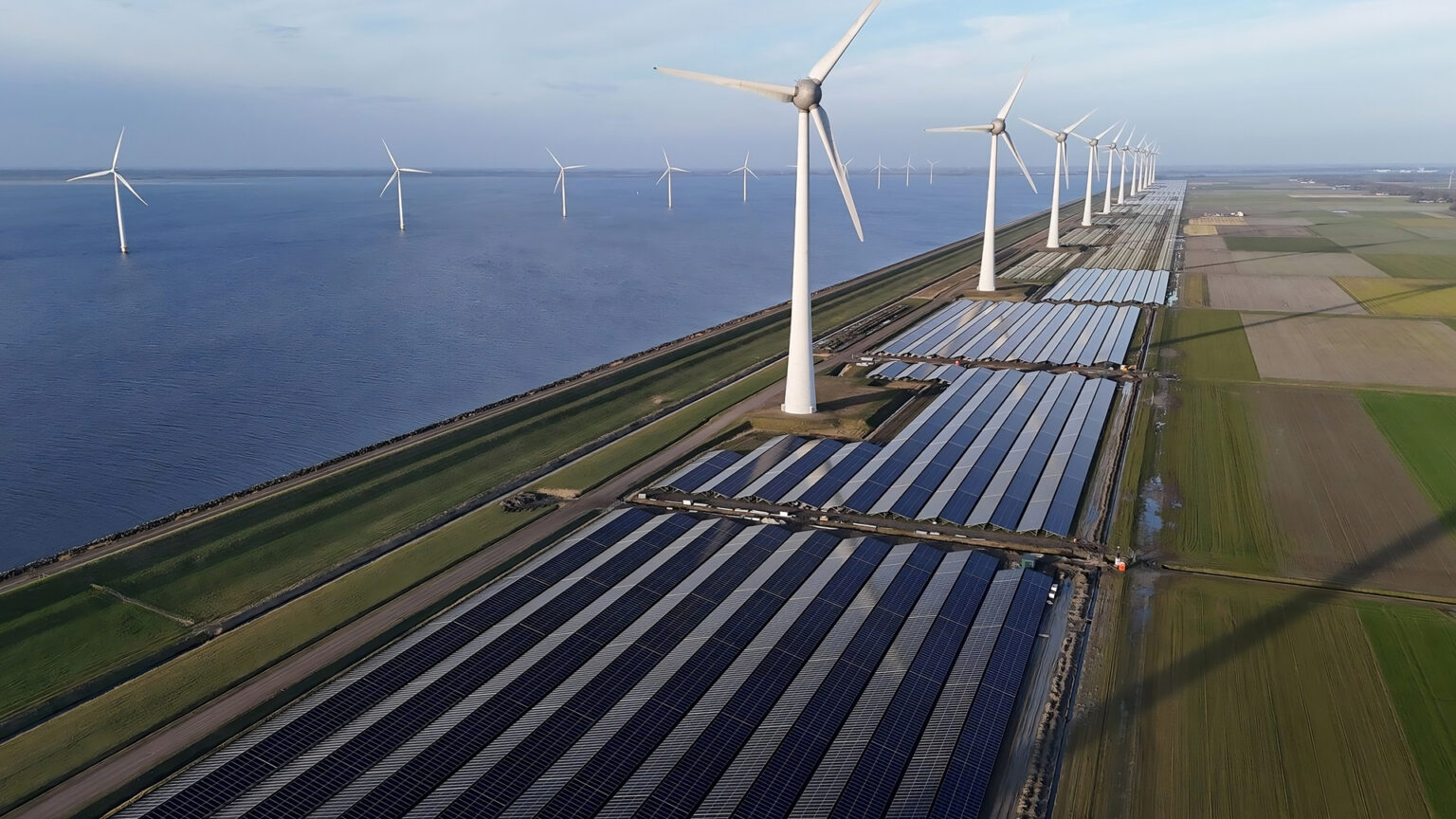
Delivering solar beneath a wind farm in the Noordoostpolder
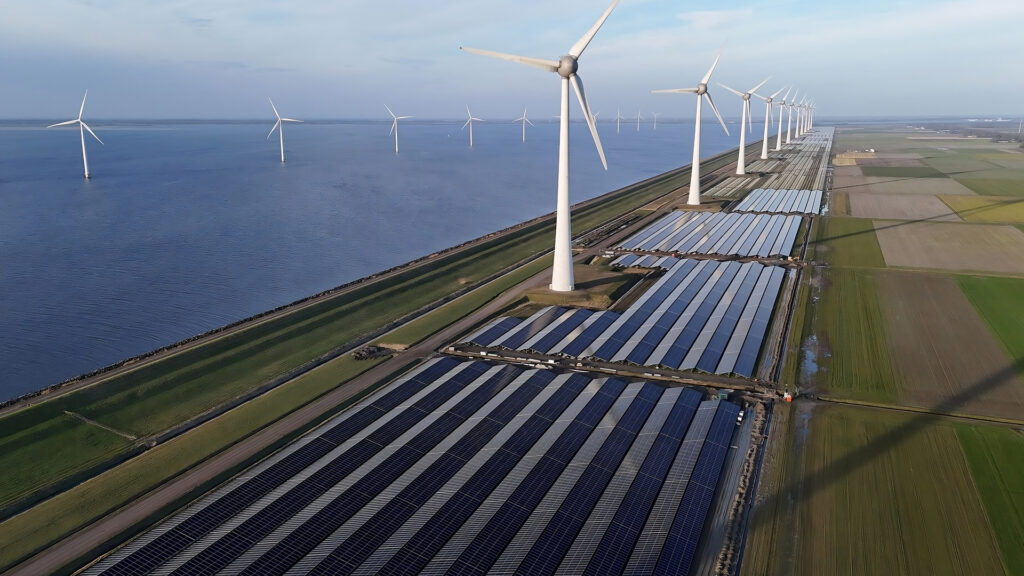
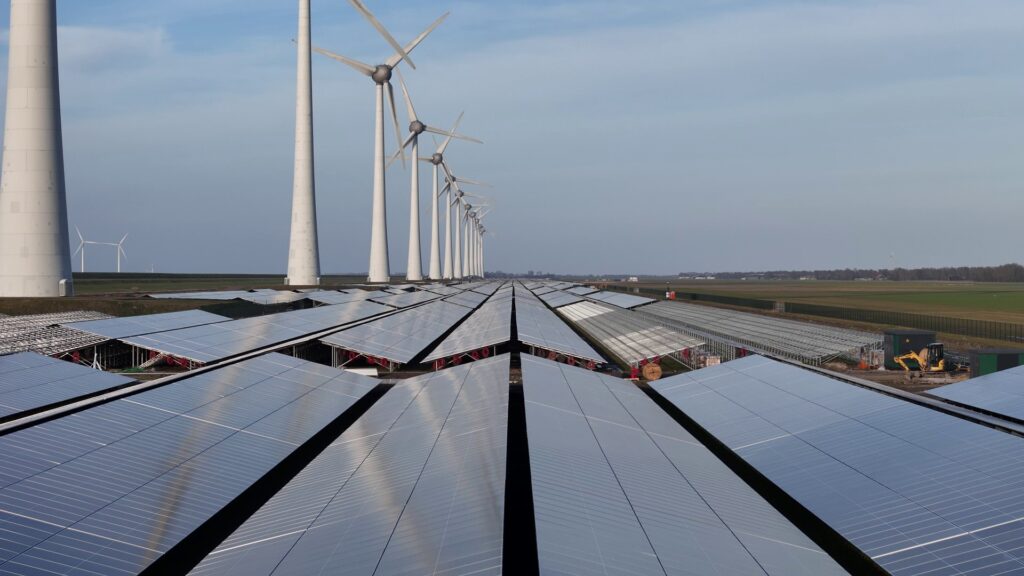
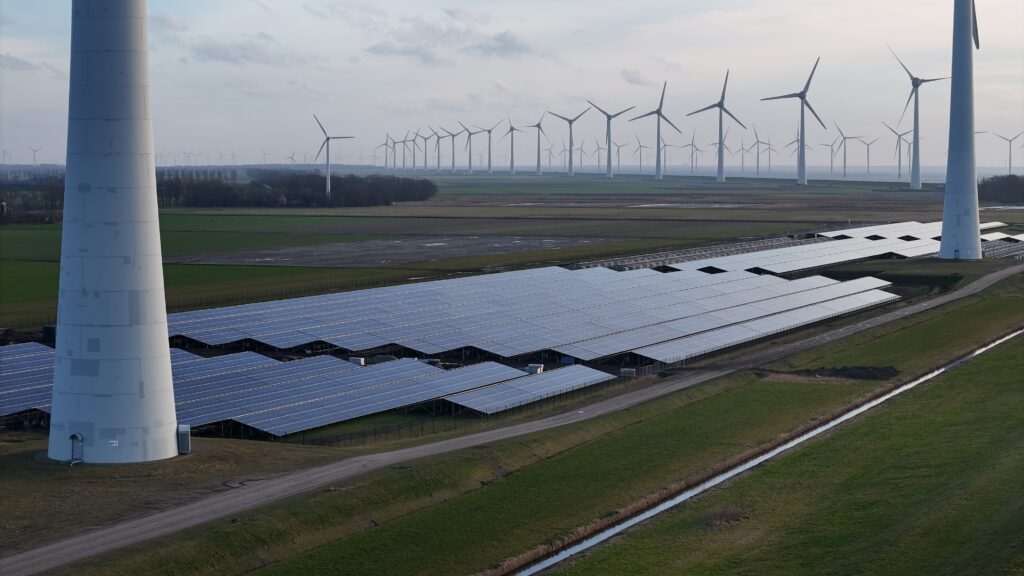
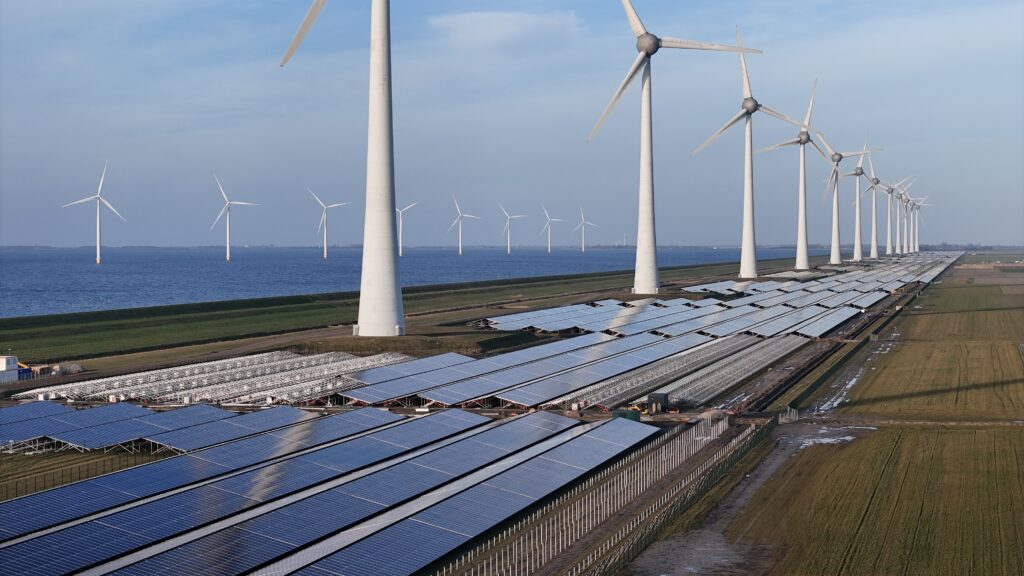
Some renewable energy projects follow a predictable path from development to construction. Others require a different approach. The NOP solar project in the Dutch Noordoostpolder belonged firmly to the latter category. Built beneath an operational wind farm and spread across multiple sections of land, the project combined technical, logistical and planning challenges rarely found in a single development.
Through careful planning and close collaboration with the client, Ecorus delivered the project in August 2024, turning complexity into a predictable outcome.
The collaboration between Ampyr and Ecorus started in September 2023. Before committing to the larger NOP project, the client first partnered with Ecorus on the smaller Groense Bos project. That initial project demonstrated the technical expertise and collaborative approach needed to move forward with a much larger development in the Noordoostpolder.
NOP was far from a standard solar project. The installation was planned beneath an operational wind turbine park, meaning that underground infrastructure, maintenance access routes and safety considerations all had to be carefully integrated into the design and construction plan.
Building a solar park is rarely simple. Doing so beneath an operational wind farm, while coordinating multiple landowners and construction teams, makes things a little more interesting. The project was also spread across multiple non-contiguous sections along an eight-kilometre corridor, with land owned by different parties in between. This required careful logistical planning and coordination between several construction teams operating simultaneously.
At the same time, some development elements were still being finalized when construction preparations began. Maintaining progress while resolving these items required close collaboration between the client and Ecorus teams to structure the project for successful execution.
1
Building beneath wind turbines
Integrating solar construction with existing wind farm infrastructure, safety zones and maintenance access.
2
Fragmented project layout
Coordinating multiple non-contiguous project sections across an eight-kilometre corridor.
3
Soft polder conditions
Managing wet soil, groundwater and trench stability near the IJsselmeer during construction.
4
Moving parts still in development
Maintaining progress while technical, developmental and timing aspects were still being finalised.
Finding the right solution for a complex landscape
Several early decisions helped bring clarity and control to a complex project environment. As is often the case in renewable energy projects, the real challenge was not whether a solution existed, but which solution would work best in this particular landscape. One of the most important steps was adapting the engineering design to the specific constraints of the wind farm site. Existing wind turbine infrastructure had to remain accessible and protected throughout construction and operation.
The engineering team developed several practical solutions: 1) Pre-cast concrete foundations to protect existing underground wind turbine cables. 2) Removable sections of the solar park, allowing crane access for wind turbine maintenance. 3) Structures engineered to cope with high groundwater levels typical for the polder landscape near the Ijsselmeer.
Another key decision involved the construction schedule. Instead of aiming for maximum installation speed, the team deliberately planned a more conservative build rate. Because from experience, the team knew that building in winter would be extremely challenging and prudent planning allowed them to keep all aspects in mind, with safety being the most critical one. This created buffers in the planning that allowed the project to absorb disruptions without jeopardising the overall timeline.
Several early decisions helped bring clarity and control to a complex project environment. As is often the case in renewable energy projects, the real challenge was not whether a solution existed, but which solution would work best in this particular landscape. One of the most important steps was adapting the engineering design to the specific constraints of the wind farm site. Existing wind turbine infrastructure had to remain accessible and protected throughout construction and operation.
The engineering team developed several practical solutions: 1) Pre-cast concrete foundations to protect existing underground wind turbine cables. 2) Removable sections of the solar park, allowing crane access for wind turbine maintenance. 3) Structures engineered to cope with high groundwater levels typical for the polder landscape near the Ijsselmeer.
Another key decision involved the construction schedule. Instead of aiming for maximum installation speed, the team deliberately planned a more conservative build rate. Because from experience, the team knew that building in winter would be extremely challenging and prudent planning allowed them to keep all aspects in mind, with safety being the most critical one. This created buffers in the planning that allowed the project to absorb disruptions without jeopardising the overall timeline.
Despite the complex site conditions and unexpected setbacks, the NOP solar park was completed in August 2024. The project shows how complex renewable energy developments can be delivered successfully when engineering expertise, structured project management and close collaboration with the client come together.
For the client, this meant the project could move into operation as planned, preserving both the financial structure and the expected performance of the asset. The experience gained during NOP also helped further strengthen Ecorus’ project preparation approach and a clearer definition of ‘ready to build’.
Today, projects are formally assessed for construction readiness before entering the EPC phase, ensuring that development and construction phases are aligned from the start.