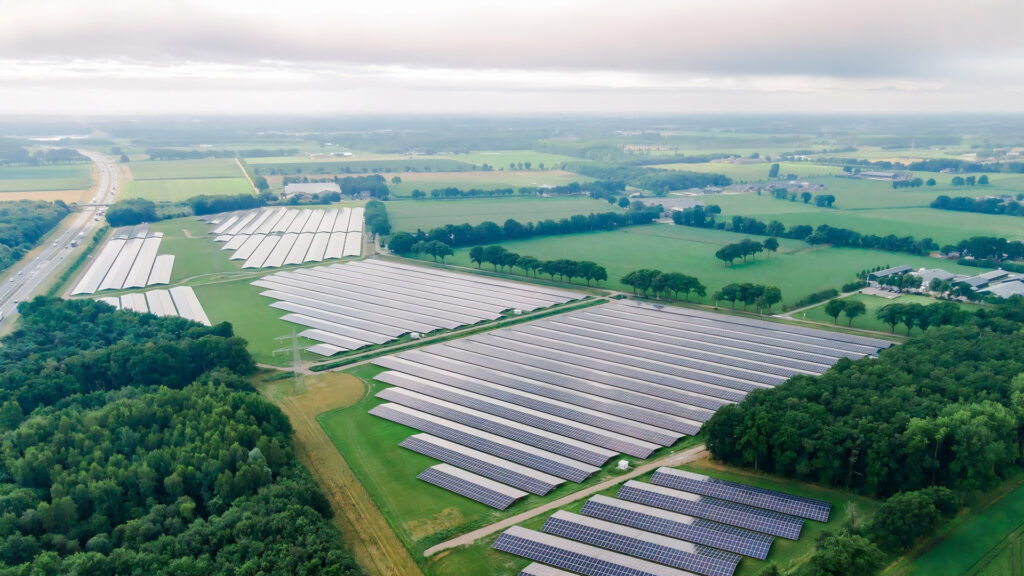
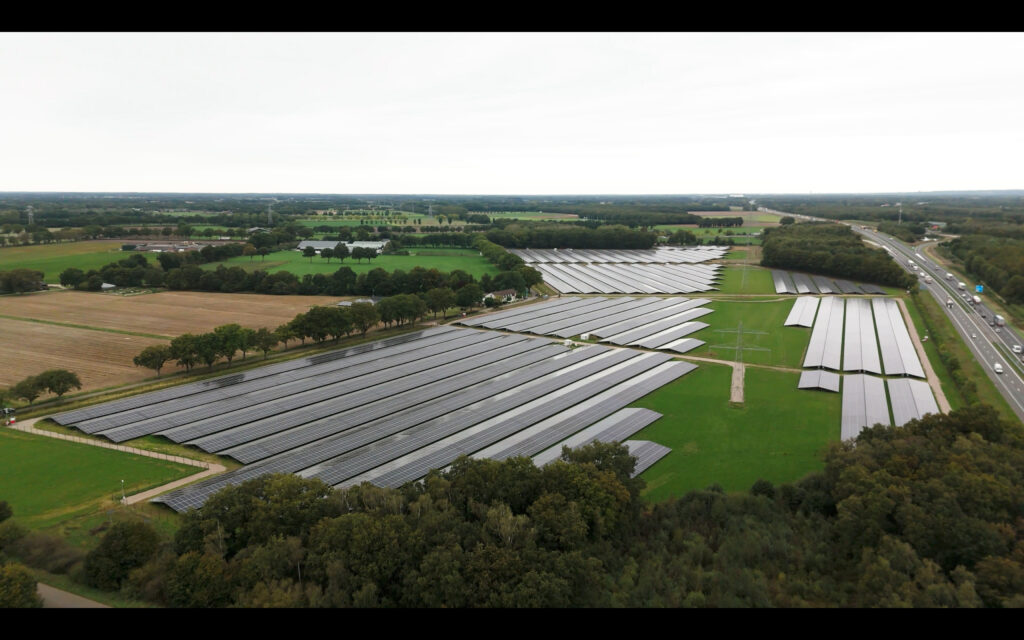
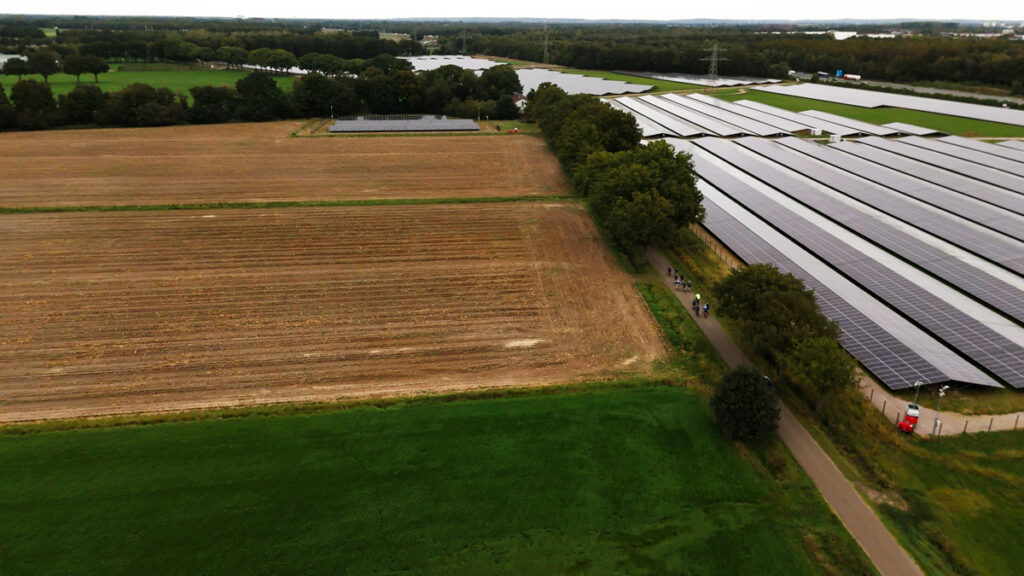
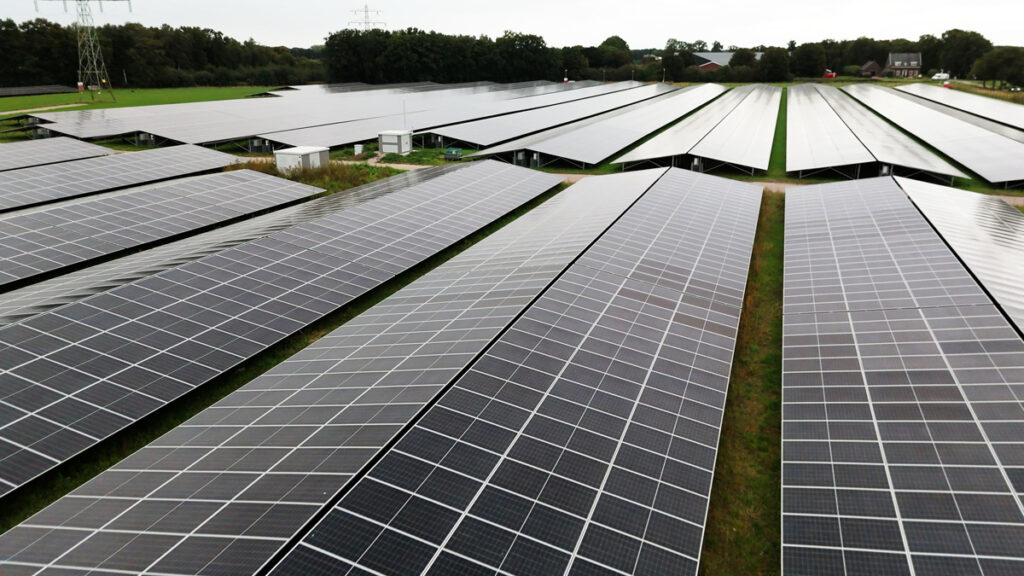
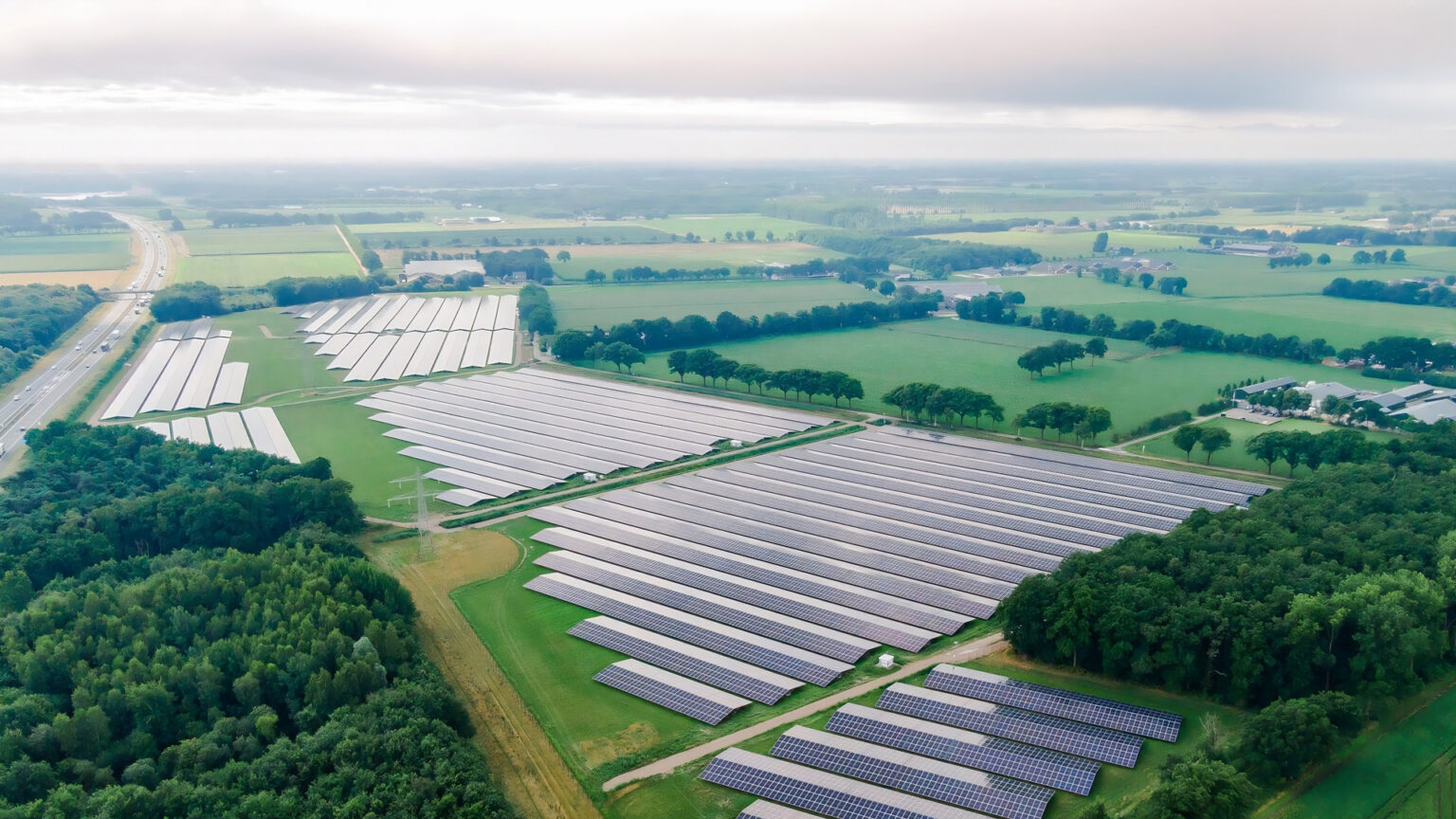
Sambeeksedijk brought together a range of technical and practical constraints that needed to be addressed in parallel. While the project was designed for a significantly higher capacity, the available grid connection was limited. The site itself also had some challenges, with multiple panel orientations, existing infrastructure and a high-voltage line running through the project area.
Rather than treating these as separate challenges, the project required an integrated approach in which design, planning and coordination were closely aligned. This meant continuously balancing what was technically possible, what was permitted and what was practically feasible on site.
Sambeeksedijk combined several factors that needed to be considered in parallel. One of the most visible constraints was the grid connection. While the park was designed for a capacity of around 30 MW, the available connection could only support a fraction of that. A future upgrade was planned, but not yet available during construction.
The site itself added another layer of complexity. The layout was shaped by natural features such as waterways and green zones, as well as existing infrastructure including underground utilities and a high-voltage line running through the project. To make optimal use of the available space, the design incorporated multiple panel orientations. And because of the long fence line due to the natural long shape of the site, many safety cameras and insurance agreements were needed. During the process, grid operator guidelines changed, client requests developed and certain design assumptions had to be revisited along the way. The challenge was not any single factor, but how all of them interacted.
1
Limited grid capacity
Designing a 30 MW project while the available grid connection could only support a fraction of that capacity.
2
Complex site layout
Working around waterways, green zones, underground utilities and a high-voltage line crossing the site.
3
Changing requirements
Adapting to evolving grid operator guidelines, client requests and design assumptions during the process.
4
Interdependent constraints
Balancing technical, permitted and practical realities so the full project could still work as one system.
One of the key decisions in the project was how to deal with the limited grid capacity. Rather than reducing output, a solution was developed to connect the project to the nearby Boxmeer solar park, located several kilometres away. This allowed electricity to be exported through an existing connection with higher capacity until the local grid is upgraded in the future. As parts of the connection were designed and executed outside of Ecorus, close collaboration with the client was essential to align how both parks would operate together.
Another important factor was the high-voltage line crossing the site. Changes in working distance requirements required close coordination with the grid operator. By working under their supervision and aligning on-site execution in detail, construction could continue safely without major redesign. Each decision influenced the next, so everything had to fit together. Not just in the design, but in how the project would actually come to life on site.
Creating structure in a dynamic project environment
One of the key decisions in the project was how to deal with the limited grid capacity. Rather than reducing output, a solution was developed to connect the project to the nearby Boxmeer solar park, located several kilometres away. This allowed electricity to be exported through an existing connection with higher capacity until the local grid is upgraded in the future. As parts of the connection were designed and executed outside of Ecorus, close collaboration with the client was essential to align how both parks would operate together.
Another important factor was the high-voltage line crossing the site. Changes in working distance requirements required close coordination with the grid operator. By working under their supervision and aligning on-site execution in detail, construction could continue safely without major redesign. Each decision influenced the next, so everything had to fit together. Not just in the design, but in how the project would actually come to life on site.
Sambeeksedijk was completed four weeks faster than the initially planned schedule. This was achieved while managing a combination of technical constraints, evolving requirements and on-site complexity. The final inspection was completed without major remarks, allowing for immediate sign-off. The success of the project was rooted in a highly experienced team, with an established way of working developed during previous projects. This allowed for effective collaboration with the client throughout execution.
Compared to earlier projects, this one marked a clear step forward in how design, coordination and execution were brought together, bringing complexity back to something that could be planned and delivered in a controlled way.